

Vital Signs Monitoring Devices Market valued at $ 4.6559 Billion to reach $ 7.8135 Billion
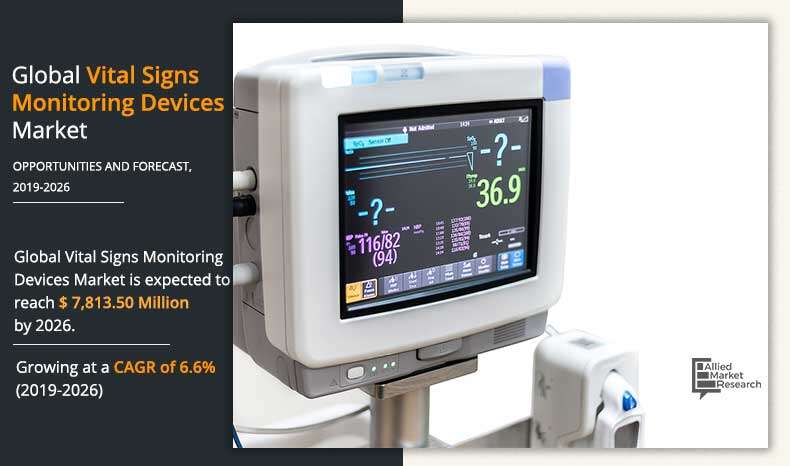
Vital Signs Monitoring Devices Market
Vital signs are used to measure the basic functions in humans such as body temperature, pulse rate, respiration rate, and blood pressure.
WILMINGTON, DELAWARE, UNITED STATES, February 12, 2024 /EINPresswire.com/ -- The global vital signs monitoring devices market is expected to witness a significant growth during the forecast period, owing to increase in importance of vital signs monitoring devices in home care settings and improved reimbursement scenario in developed countries. In addition, surge in geriatric population and rise in incidence rate of cardiovascular disorders such as hypertension and other preexisting health conditions including COPD, sleep apnea, and infectious diseases fuel the demand for vital signs monitoring devices, globally. Moreover, increase in use of vital signs monitoring devices for fitness monitoring and rise in ambulatory surgery centers across various countries, which use vital signs monitoring devices routinely, foster the market growth.
𝟏. 𝐁𝐥𝐨𝐨𝐝 𝐏𝐫𝐞𝐬𝐬𝐮𝐫𝐞 𝐌𝐨𝐧𝐢𝐭𝐨𝐫𝐢𝐧𝐠 𝐃𝐞𝐯𝐢𝐜𝐞𝐬: 𝐏𝐫𝐞𝐜𝐢𝐬𝐢𝐨𝐧 𝐢𝐧 𝐂𝐚𝐫𝐝𝐢𝐨𝐯𝐚𝐬𝐜𝐮𝐥𝐚𝐫 𝐇𝐞𝐚𝐥𝐭𝐡
Blood pressure monitoring is a cornerstone of cardiovascular health assessment. In hospitals and clinics, automated blood pressure monitors provide accurate and efficient readings, aiding healthcare professionals in diagnosing and managing conditions such as hypertension. The accessibility of these devices ensures routine monitoring and early intervention, reducing the risk of complications.
In ambulatory surgery centers, continuous blood pressure monitoring is crucial during procedures, allowing for immediate detection of any fluctuations that may require prompt attention. Home care settings benefit from portable blood pressure monitors, enabling patients to monitor their blood pressure regularly and empowering them to actively participate in their health management.
𝐑𝐞𝐪𝐮𝐞𝐬𝐭 𝐒𝐚𝐦𝐩𝐥𝐞 𝐑𝐞𝐩𝐨𝐫𝐭 : https://www.alliedmarketresearch.com/request-sample/527
𝟐. 𝐏𝐮𝐥𝐬𝐞 𝐎𝐱𝐢𝐦𝐞𝐭𝐞𝐫𝐬: 𝐄𝐧𝐬𝐮𝐫𝐢𝐧𝐠 𝐎𝐱𝐲𝐠𝐞𝐧 𝐒𝐚𝐭𝐮𝐫𝐚𝐭𝐢𝐨𝐧 𝐢𝐧 𝐃𝐢𝐯𝐞𝐫𝐬𝐞 𝐒𝐞𝐭𝐭𝐢𝐧𝐠𝐬
Pulse oximeters have become indispensable in monitoring oxygen saturation levels, especially in environments where respiratory health is paramount. In hospitals, these devices aid in assessing the effectiveness of respiratory interventions and can be vital in critical care scenarios. Ambulatory surgery centers benefit from the real-time monitoring of oxygen saturation during procedures, ensuring patient safety.
Pulse oximeters in home care settings provide a valuable tool for patients with respiratory conditions such as COPD or asthma. Regular monitoring allows for early detection of oxygen saturation dips, facilitating timely interventions and reducing the likelihood of respiratory emergencies.
𝟑. 𝐓𝐞𝐦𝐩𝐞𝐫𝐚𝐭𝐮𝐫𝐞 𝐌𝐨𝐧𝐢𝐭𝐨𝐫𝐢𝐧𝐠 𝐃𝐞𝐯𝐢𝐜𝐞𝐬: 𝐀 𝐂𝐨𝐫𝐧𝐞𝐫𝐬𝐭𝐨𝐧𝐞 𝐢𝐧 𝐈𝐧𝐟𝐞𝐜𝐭𝐢𝐨𝐧 𝐂𝐨𝐧𝐭𝐫𝐨𝐥
Temperature monitoring is fundamental in detecting signs of infection, a crucial aspect in hospitals and clinics. In these settings, advanced temperature monitoring devices offer quick and accurate readings, aiding in the early identification of fevers and potential infections. This is particularly crucial in preventing the spread of contagious diseases within healthcare facilities.
Ambulatory surgery centers integrate temperature monitoring devices into pre-operative and post-operative care, ensuring that patients are in optimal condition for surgery and monitoring their recovery afterward. In home care settings, non-invasive thermometers provide a user-friendly means for patients to monitor their temperature regularly, promoting early detection of potential health issues.
𝐏𝐫𝐨𝐜𝐮𝐫𝐞 𝐂𝐨𝐦𝐩𝐥𝐞𝐭𝐞 𝐑𝐞𝐬𝐞𝐚𝐫𝐜𝐡 𝐑𝐞𝐩𝐨𝐫𝐭 𝐍𝐨𝐰 : https://www.alliedmarketresearch.com/vital-signs-monitoring-market/purchase-options
𝟒. 𝐀𝐝𝐯𝐚𝐧𝐭𝐚𝐠𝐞𝐬 𝐢𝐧 𝐇𝐨𝐬𝐩𝐢𝐭𝐚𝐥𝐬 𝐚𝐧𝐝 𝐂𝐥𝐢𝐧𝐢𝐜𝐬
In hospitals and clinics, the integration of these vital signs monitoring devices streamlines patient care processes. Automated readings from blood pressure monitors, pulse oximeters, and temperature devices not only save time for healthcare professionals but also enhance the accuracy of data collection. This, in turn, contributes to more informed decision-making, ultimately improving patient outcomes.
The ability to continuously monitor vital signs is particularly crucial in critical care units, where any deviation from normal ranges requires immediate attention. The seamless integration of these devices into electronic health records (EHRs) further enhances the efficiency of data management, facilitating a comprehensive approach to patient care.
𝟓. 𝐀𝐦𝐛𝐮𝐥𝐚𝐭𝐨𝐫𝐲 𝐒𝐮𝐫𝐠𝐞𝐫𝐲 𝐂𝐞𝐧𝐭𝐞𝐫𝐬: 𝐄𝐧𝐡𝐚𝐧𝐜𝐢𝐧𝐠 𝐏𝐫𝐨𝐜𝐞𝐝𝐮𝐫𝐚𝐥 𝐒𝐚𝐟𝐞𝐭𝐲
Ambulatory surgery centers benefit from the portability and precision of vital signs monitoring devices. Before and during surgical procedures, continuous monitoring of blood pressure, oxygen saturation, and temperature ensures the safety of patients. In the post-operative phase, these devices play a vital role in monitoring recovery and detecting any post-surgical complications promptly.
The ease of use and reliability of these devices contribute to the overall efficiency of ambulatory surgery centers, allowing healthcare professionals to focus on providing high-quality care during surgical interventions and in the immediate post-operative period.
𝐈𝐧𝐪𝐮𝐢𝐫𝐞 𝐁𝐞𝐟𝐨𝐫𝐞 𝐁𝐮𝐲𝐢𝐧𝐠 : https://www.alliedmarketresearch.com/purchase-enquiry/527
𝟔. 𝐇𝐨𝐦𝐞 𝐂𝐚𝐫𝐞 𝐒𝐞𝐭𝐭𝐢𝐧𝐠𝐬: 𝐄𝐦𝐩𝐨𝐰𝐞𝐫𝐢𝐧𝐠 𝐏𝐚𝐭𝐢𝐞𝐧𝐭𝐬
The advent of vital signs monitoring devices has brought healthcare into the homes of patients. In home care settings, patients can actively participate in their health management by regularly monitoring their vital signs. Portable and user-friendly devices empower individuals to take charge of their well-being, providing a sense of control and contributing to improved adherence to treatment plans.
For individuals managing chronic conditions, such as hypertension or respiratory disorders, the ability to monitor vital signs at home reduces the need for frequent hospital visits. This not only enhances the quality of life for patients but also contributes to cost savings in the broader healthcare system.
𝟕. 𝐓𝐡𝐞 𝐑𝐨𝐥𝐞 𝐨𝐟 𝐓𝐞𝐥𝐞𝐡𝐞𝐚𝐥𝐭𝐡 𝐢𝐧 𝐕𝐢𝐭𝐚𝐥 𝐒𝐢𝐠𝐧𝐬 𝐌𝐨𝐧𝐢𝐭𝐨𝐫𝐢𝐧𝐠
The rise of telehealth has further amplified the significance of vital signs monitoring devices. Through virtual consultations, healthcare professionals can remotely monitor patients' vital signs in real-time. This is particularly beneficial for individuals in home care settings, enabling timely interventions and reducing the need for unnecessary hospital visits.
Telehealth, combined with the data generated by vital signs monitoring devices, facilitates a more comprehensive approach to healthcare. Patients can share their vital signs data with healthcare providers, fostering a collaborative and proactive approach to managing health conditions.
𝟖. 𝐎𝐯𝐞𝐫𝐜𝐨𝐦𝐢𝐧𝐠 𝐂𝐡𝐚𝐥𝐥𝐞𝐧𝐠𝐞𝐬 𝐚𝐧𝐝 𝐄𝐧𝐬𝐮𝐫𝐢𝐧𝐠 𝐀𝐜𝐜𝐞𝐬𝐬𝐢𝐛𝐢𝐥𝐢𝐭𝐲
While the integration of vital signs monitoring devices presents numerous advantages, challenges such as data security, interoperability, and affordability must be addressed. Ensuring that these devices are accessible to all segments of the population, regardless of socio-economic factors, is crucial to prevent healthcare disparities and promote inclusive healthcare.
Collaboration between technology developers, healthcare providers, regulators, and patients is essential to overcome these challenges. Open communication and shared insights will contribute to refining these technologies, addressing concerns, and ensuring that vital signs monitoring devices meet the highest standards of safety, efficacy, and accessibility.
𝟗. 𝐅𝐮𝐭𝐮𝐫𝐞 𝐓𝐫𝐞𝐧𝐝𝐬 𝐚𝐧𝐝 𝐈𝐧𝐧𝐨𝐯𝐚𝐭𝐢𝐨𝐧𝐬
The future of vital signs monitoring devices holds exciting possibilities. Innovations in sensor technology, artificial intelligence, and connectivity are likely to further enhance the capabilities of these devices. Integration with other health monitoring parameters, such as glucose levels, electrocardiogram readings, and activity tracking, will provide a more holistic view of an individual's health.
As technology continues to advance, the development of personalized algorithms for vital signs interpretation will become increasingly sophisticated, allowing for even more tailored and precise healthcare interventions. The ongoing collaboration between the healthcare and technology sectors will play a pivotal role in driving these advancements.
𝟏𝟎. 𝐂𝐨𝐧𝐜𝐥𝐮𝐬𝐢𝐨𝐧: 𝐀 𝐇𝐨𝐥𝐢𝐬𝐭𝐢𝐜 𝐀𝐩𝐩𝐫𝐨𝐚𝐜𝐡 𝐭𝐨 𝐇𝐞𝐚𝐥𝐭𝐡𝐜𝐚𝐫𝐞
In conclusion, the integration of vital signs monitoring devices, including Blood Pressure Monitoring Devices, Pulse Oximeters, and Temperature Monitoring Devices, is revolutionizing healthcare across various settings. From hospitals and clinics to ambulatory surgery centers and home care settings, these devices are enhancing patient care, improving efficiency, and empowering individuals to actively participate in their health management.
The future of healthcare lies in the seamless integration of technology into patient care processes, fostering a holistic and proactive approach to health management. As we continue to embrace and refine vital signs monitoring devices, the collective efforts of healthcare professionals, technology developers, and policymakers will shape a healthcare landscape that is more accessible, efficient, and patient-centered.
𝐀𝐛𝐨𝐮𝐭 𝐔𝐬 :
Allied Market Research (AMR) is a full-service market research and business-consulting wing of Allied Analytics LLP based in Portland, Oregon. Allied Market Research provides global enterprises as well as medium and small businesses with unmatched quality of “Market Research Reports” and “Business Intelligence Solutions.” AMR has a targeted view to provide business insights and consulting to assist its clients to make strategic business decisions and achieve sustainable growth in their respective market domain.
We are in professional corporate relations with various companies and this helps us in digging out market data that helps us generate accurate research data tables and confirms utmost accuracy in our market forecasting. Allied Market Research CEO Pawan Kumar is instrumental in inspiring and encouraging everyone associated with the company to maintain high quality of data and help clients in every way possible to achieve success. Each and every data presented in the reports published by us is extracted through primary interviews with top officials from leading companies of domain concerned. Our secondary data procurement methodology includes deep online and offline research and discussion with knowledgeable professionals and analysts in the industry.
David Correa
Allied Market Research
+1 800-792-5285
email us here
Visit us on social media:
Facebook
Twitter
LinkedIn
Legal Disclaimer:
EIN Presswire provides this news content "as is" without warranty of any kind. We do not accept any responsibility or liability for the accuracy, content, images, videos, licenses, completeness, legality, or reliability of the information contained in this article. If you have any complaints or copyright issues related to this article, kindly contact the author above.
